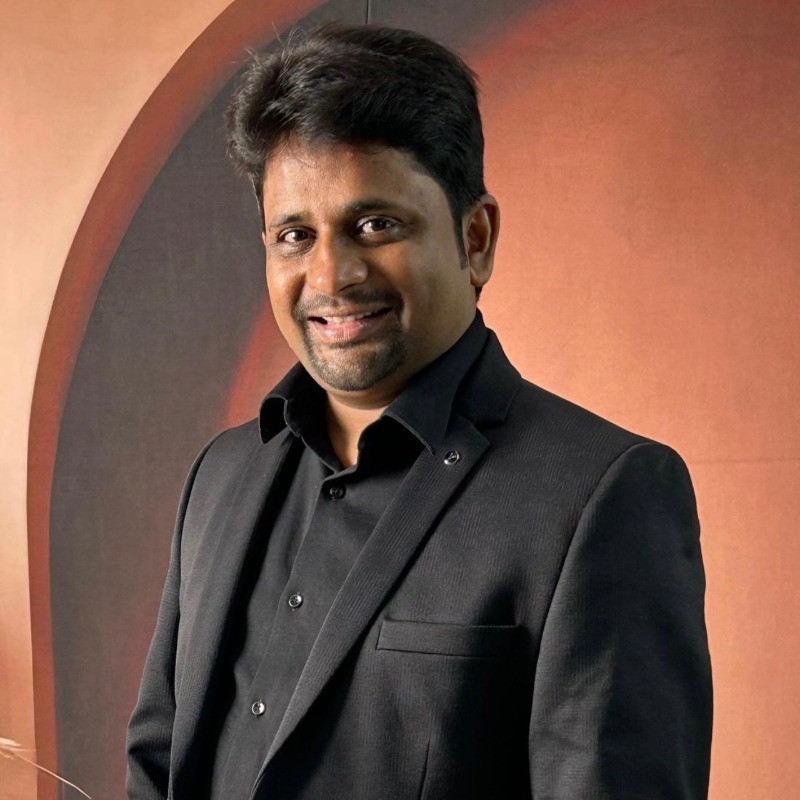
I have built software for businesses my whole working life: eighteen years of it at Ameyo, from standard tools for small contact-centre teams to large-scale deliveries for enterprises across the globe. That run gave me a long, close view of digitisation across industries. What I saw convinced me to start again.
What I saw
I am a developer at the core; architecture and problem-solving are the strengths I carry. And the honest word for the technology most businesses run on is mediocre. These were not struggling companies. They were industry digital leaders with serious budgets and dedicated teams.
Expectations had quietly settled low. Work ran on spreadsheets, email and chat. Decisions ran on gut. Finding the truth of the business was itself a job: whole teams existed to assemble data and present a story to management, and the story bent toward whoever told it.
Why it was so
Dig into the mess and the reasons are real. Systems that evolved carrying their legacy. The risk of breaking business continuity. Change management nobody wants to own. Vendor economics that reward the status quo. And underneath all of it, the human side of how things get built and bought.
What surprised me was the people. The leaders I met were full of ideas and wanted the right things for their businesses and their teams. Intent was never the problem. The structure around it was.
One mission
In 2021 I exited Ameyo and gave myself to a single mission, the kind that defines who you are: unlock the power of the latest technology for businesses, with the least resistance.
This was before GenAI. We made two bets designed to feed each other: align teams on common goals and the drive to get things done: we chose OKRs for that, and low-code strong enough to break free of mediocre digital and act as the catalyst. We started on an existing low-code platform and shipped working applications early: a sales CRM, a service CRM: iterating with live clients.
The market taught us quickly: many clients wanted a consultancy more than a technology partner. Not our cup of tea. We refocused on the product.
A faster path
Then GenAI arrived, and gained ground exponentially. It changed what I believed we could attempt, and how fast. We didn't abandon the track; we jumped to a faster one. Same mission, radically shorter timelines. GenAI wasn't a feature to bolt on. It was the engine that could carry us to the goal years sooner.
What if a company ran on a system that everyone could build and use at the same time?
The system I want to exist
I have always loved Jarvis in Iron Man, not the suit, the partnership. That question above is the one I couldn't put down. A company where every seat participates in building the system it works in:
That is what we are building: from prompt to mission-critical applications, with governance in the platform's bones, so building belongs to everyone who runs the work.
It is going to be a long journey. I am committed.